For Jeffrey Rathmell, PhD, coming to the University of Chicago to become Chair of the Ben May Department for Cancer Research was a full circle moment. A native of the Midwest, he began his career as a postdoctoral fellow at UChicago, studying immune system metabolism in the lab of Craig B. Thompson. When he had the opportunity to return to the Hyde Park campus, Rathmell knew he couldn’t pass it up.
“I was really only interested in going to places that I had an affiliation with and an affinity for,” he said. “I had a wonderful time when I was here 25 years ago. The place has changed pretty dramatically since then, but it's always been friendly. When I came to visit, I still knew a lot of people and I felt very much at home, so I was excited to get the opportunity.”
Rathmell officially returned to UChicago in July 2025, after a long career first at Duke University, and then most recently Vanderbilt University Medical Center, where he was the Cornelius Vanderbilt Professor of Immunobiology and Director of the Vanderbilt Center for Immunobiology.
During that time, his research has helped shape the field of immunometabolism; that is, the metabolism of cancer cells and what drives them to grow, how that relates to immune responses, and then ultimately how those immune responses impact the tumors. His work bridges genetics, metabolism, autoimmunity, and immune therapies to identify connections between obesity and cancer and discover new mechanisms that regulate tumors, themes that he hopes to focus on in his new role.
Historic foundations
The Ben May Department has a long and storied history. It was first established in 1951 with the support of Alabama businessman and philanthropist Ben May. Charles B. Huggins, who won the Nobel Prize in 1966 for his work developing hormone treatment for prostate cancer, led the nascent research institute in its early years until 1969, establishing its mission of advancing cancer treatment by providing answers to fundamental biological questions and finding applications for those groundbreaking scientific discoveries.
“We're ready for the next chapter of our history, which is to take what we've discovered as a basic science department and translate that into the clinic,” said Kay Macleod, PhD, the Hospira Foundation Professor and vice chair of the department. “We have a very strong cancer biology program and a strong immunology program, so having someone like Jeff who can bring more of those people together is going to be really powerful.”
Rathmell sees the department’s role as a hub of basic science research anchoring the broader cancer research and treatment ecosystem at UChicago, which is deeply embedded across several clinical departments, research centers, and the UChicago Comprehensive Cancer Center. He hopes to capitalize on growing interest in how cancer cells interact with their “microenvironment,” or immediate surroundings, and the immune system. This will help improve cancer immunotherapy, better understand the risk factors posed by obesity, and decipher things like the impact of temperature and fever on metabolism and immunity in the context of cancer.
“Ben May is in a unique position at the University of Chicago to really help the university give cancer care back to patients, approaching it from a basic science angle and building on those discoveries,” he said. “The department has many faculty who are doing different kinds of work. It's very interdisciplinary as a disease-oriented basic science department, and our place is that we bring lots of different skill sets together with this targeted mission towards advancing cancer research.”
An exciting time for cancer research
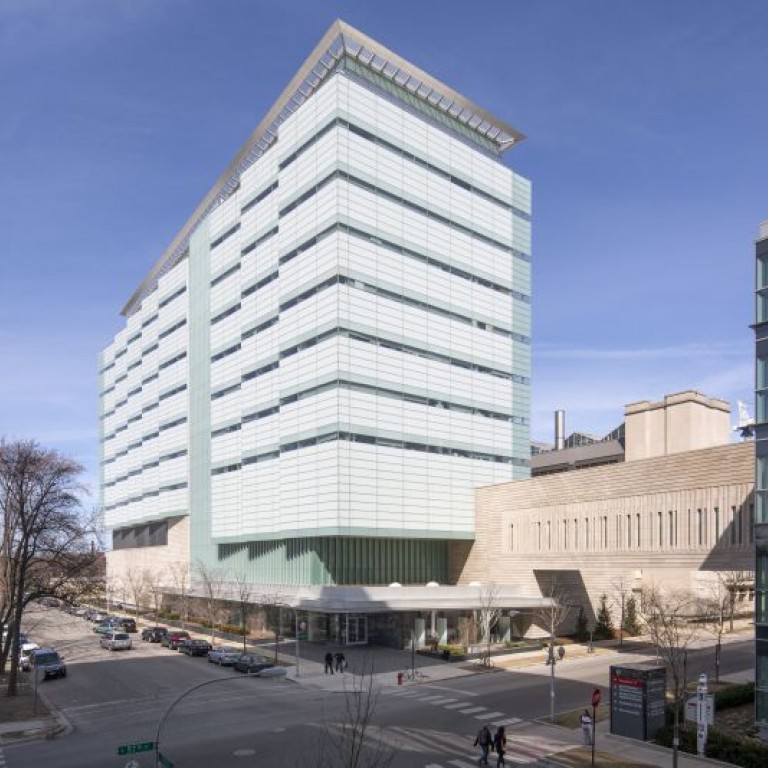
He also returns to the University at an exciting time. The AbbVie Foundation Cancer Pavilion, a 575,000-square-foot facility set to open on the Hyde Park campus in 2027, will be the first freestanding center in Illinois dedicated solely to cancer care and research. And earlier this year, UChicago celebrated the opening of Hyde Park Labs, a new commercial laboratory facility that includes space for academic research, science-based companies and the UChicago Science Incubator, which will accelerate discoveries into companies and real-world solutions.
These new facilities are crucial selling points as Rathmell looks to grow the department and recruit more faculty to build upon its tradition of innovative research while focusing on translating that to real-world impact for patients. The real value, he says, comes from having basic science researchers working side by side with startup companies, with the support of university infrastructure like the Polsky Center for Entrepreneurship and Innovation, to bring their discoveries to light.
“We're going to have a University of Chicago ecosystem that's connected with biotech startups, and that's going to give us a whole new opportunity to bring our work forward to patients,” he said. “Making sure that those connections are really easy and formalized here is going to jump start huge numbers of opportunities to get basic science discoveries into companies, into the clinic, and helping patients.”