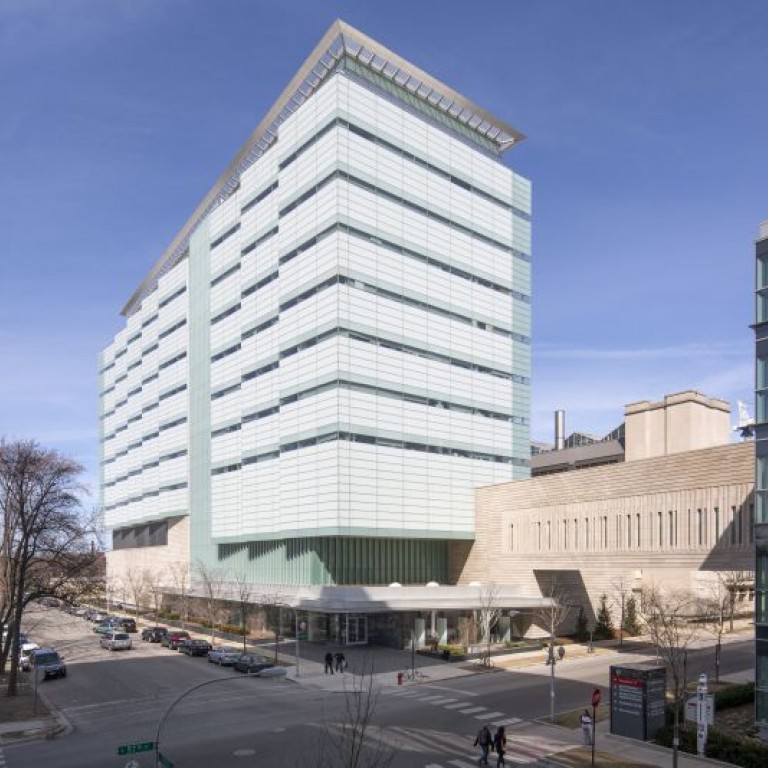
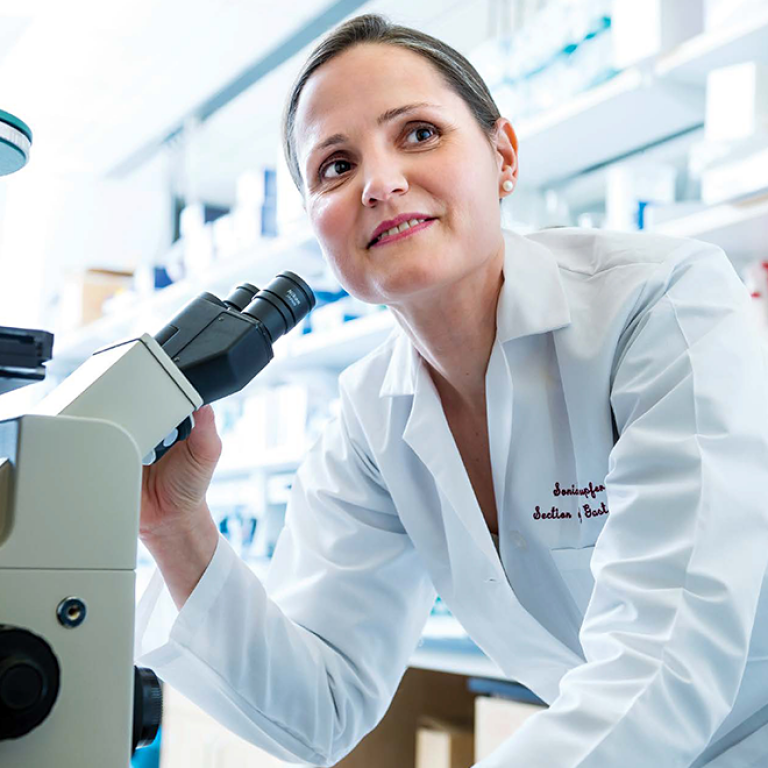
From March 18–20, 2026, the University of Chicago welcomed nearly 200 international blood cancer experts to the Rubenstein Forum for a Classification Advancement Meeting (CAM). This gathering marked a significant step in developing an updated and unified classification for malignant lymphoma, myeloid disorders, acute leukemias, and histiocytic disorders to inform the upcoming 6th edition of the World Health Organization (WHO) Classification of Hematologic Neoplasms. The outcomes will have a major impact on the future of cancer diagnosis.
Building consensus for a global standard
For over two decades, the WHO classifications guided diagnosis and treatment of hematologic malignancies. However, in recent years, the 5th edition of the WHO classification co-existed with a separate International Consensus Classification, with small but significant differences.
“This created a lot of angst,” reflected conference host Daniel Arber, MD, the Donald West and Mary Elizabeth King Professor of Pathology and Chair of the Department of Pathology at UChicago. “The tasks of this year’s meeting were to reconcile the differences between the two most recent classifications and come up with new advanced proposals. The collaborative work continues after the meeting, but it went very well and already resolved a vast majority of issues.”
To develop the classifications, the international experts work together to define biologic entities: distinct diseases that have recognizable features under a microscope and specific genetic markers.
A tradition of leadership and collaboration
UChicago has been at the heart of hematologic neoplasm classification since the very beginning, originating with the work of Henry Rappaport, MD, a former Director of Surgical Pathology. In 1956, he proposed the first classification of non-Hodgkin lymphomas. The eponymous Rappaport classification helped lay the early foundations of clinico-pathologic classification, and his influence continued as an editor of the first WHO classification. Decades later, James Vardiman, MD, and Michelle LeBeau, PhD, hosted critical Clinical Advisory Committee (CAC) meetings at UChicago’s Gleacher Center, establishing the institution as a recurring hub for consensus-building in hematopathology. Current faculty including Arber, Wendy Stock, MD, Sonali Smith, MD, Olatoyosi Odenike, MD, and Neval Ozkaya, MD, continue this legacy, playing key roles in the 2026 CAM.
“UChicago has always championed collaboration between scientists, pathologists and clinicians to tackle the hardest questions. This meeting is another testament to that spirit,” said Sonali Smith, MD, the Elwood V. Jensen Professor of Medicine and Chief of the Section of Hematology and Oncology. “Bringing together experts from across the globe ensures that the next classification reflects real-world needs and advances care everywhere.”
Implications for patients and science
The updated classification will enable more precise diagnoses and better predictions of patient outcomes, including identifying those who may need aggressive treatment or who might benefit from targeted therapies.
“Having a unified, evidence-based classification empowers clinicians to make better decisions, facilitates research, and most importantly, gives patients clarity and confidence," said Wendy Stock, MD, the Anjuli Seth Nayak Professor of Medicine.
In the past, new disease classifications have been proposed based on emerging evidence, even before commercial diagnostic tests for the relevant genetic markers were widely available. The act of recognizing and defining these entities motivates laboratories to develop new assays and technologies, propelling the field forward and ensuring that patients will benefit from the latest advancements in cancer genetics and diagnostics.
“People wonder why we split diseases into so many confusing sub-classifications,” Arber said. “But sometimes a set of cancers looks like a single disease when compared under a microscope, yet it turns out to be 20 distinct entities at the genetic level, all of which will respond differently to various treatments. It opens doors to discovering highly effective targeted therapies.”